World
US deportees tortured in Equatorial Guinea detention hotel, witnesses say
Witnesses claim two men expelled by the US were bound, hooded, and beaten in front of fellow detainees at a hotel in Equatorial Guinea.
18 September 2026
Federal Minister Ahsan Iqbal initiated contact with Jamaat-e-Islami to resume talks, while Liaquat Baloch demanded immediate abolition of the petroleum levy.
Federal Minister Ahsan Iqbal has formally contacted Jamaat-e-Islami Vice Emir Liaquat Baloch to propose a fifth round of direct talks aimed at diffusing growing civil unrest over utility costs and fuel taxes. Jamaat-e-Islami leadership confirmed the outreach, reiterating that any further engagement remains conditional on internal party consultations and tangible government action, starting with the complete abolition of the statutory petroleum levy on fuel prices.
The government’s outreach to Jamaat-e-Islami comes after four turbulent rounds of dialogue sparked by nationwide public sit-ins. The central driver of public outrage remains the steep surge in monthly electricity bills, compounded by heavy capacity payments to Independent Power Producers (IPPs) and escalating fuel surcharge costs. While earlier negotiation rounds produced technical committees tasked with reviewing power purchase agreements, implementation has lagged behind public expectations.
Ahsan Iqbal’s direct phone call to Liaquat Baloch represents an explicit effort by the ruling coalition to prevent another wave of urban protests. During the exchange, the federal minister conveyed the administration's willingness to sit down for a fifth formal session to review progress on previously discussed demands. However, the opposition party maintains that dialogue cannot serve as a stall tactic while citizens bear heavy taxation .
Liaquat Baloch made it clear that Jamaat-e-Islami will decide its next steps only after thorough consultation within its central leadership council (Majlis-e-Shura). Speaking on behalf of his party, Baloch emphasized that public frustration stems directly from fiscal policies that prioritize government revenue generation over basic living costs. Abolishing the petroleum levy—currently imposed at maximum statutory limits—remains a non-negotiable benchmark for assessing government sincerity.
The central sticking point in negotiations remains the federal petroleum levy. For fiscal planners, fuel taxes provide an indispensable cushion to satisfy strict fiscal deficit targets under international bailout programs. With revenue collection under continuous pressure, removing or reducing the levy directly threatens official budget calculations. Yet for ordinary citizens and commercial transporters, high fuel surcharges ripple through every layer of the economy, driving food inflation and freight expenses upward.
Jamaat-e-Islami’s campaign has successfully transformed technical energy tariff formulas into an urgent political debate. By targeting both electricity capacity charges and fuel surcharges, the party has galvanized middle-class consumers, trade associations, and transport workers. Liaquat Baloch pointed out that while the state continues to collect record taxes from fuel consumers, relief measures for industrial and residential users remain largely transactional and temporary.
The mathematical reality facing domestic consumers is stark. When high petroleum levies are combined with sales taxes and fluctuating global oil prices, retail fuel costs remain artificially inflated despite periodic dips in international crude benchmarks . Jamaat-e-Islami argues that structural fiscal adjustment must begin by curbing state expenditure and renegotiating sovereign contracts rather than squeezing retail end-users.
Unlike traditional political alliances focused strictly on electoral seats, Jamaat-e-Islami’s strategy relies heavily on grassroots pressure and economic grievances. By anchoring its demands around utility bills, fuel taxes, and IPP audits, the party has established a wide appeal that transcends conventional party loyalties. This civic momentum forces federal negotiators back to the table despite competing legislative priorities in Islamabad.
The previous four rounds of talks established specialized working groups tasked with reviewing electricity pricing mechanisms, tax rationalization, and industrial power subsidies. However, execution has stalled due to federal balance-sheet constraints. Liaquat Baloch reaffirmed that Jamaat-e-Islami will not enter a fifth round merely to repeat past talking points. The party expects concrete executive notifications removing the petroleum levy before committing to extended dialogue.
As internal consultations continue within Jamaat-e-Islami’s leadership, the political initiative rests with the federal cabinet. Granting tax concessions on petroleum products could reduce state revenues, but ignoring the demand risks reviving large-scale urban blockades across major economic hubs.
Ahsan Iqbal contacted Liaquat Baloch to initiate a fifth round of formal negotiations to address public protests regarding rising utility tariffs and taxation. Jamaat-e-Islami confirmed receiving the request but stated its response depends on internal consultations.
Jamaat-e-Islami has demanded the immediate abolition of the petroleum levy on fuel products as a condition for proceeding with talks. Vice Emir Liaquat Baloch emphasized that relief on fuel and power tariffs is necessary to ease public financial strain.
Four rounds of negotiations have taken place prior to Ahsan Iqbal's recent call. These sessions focused on setting up technical committees to review electricity pricing, IPP contracts, and fuel surcharges.
GuruAlpha News Desk
The GuruAlpha News team delivers accurate, timely coverage of breaking news, markets, technology, and lifestyle — in English and Urdu.
Witnesses claim two men expelled by the US were bound, hooded, and beaten in front of fellow detainees at a hotel in Equatorial Guinea.
18 September 2026
President Trump bans major media outlets from the White House, citing unfavorable coverage, sparking press freedom concerns.
18 September 2026
A salmon boom in Alaska's Katmai National Park has led to the biggest Fat Bear Week ever, with 16 competitors vying for the title.
18 September 2026
Lawsuits accuse the Trump administration of voter intimidation by suggesting federal officers could monitor polling sites.
18 September 2026
The Bank of Japan raised its benchmark interest rate to 1.25% to curb persistent inflation driven by global conflicts and energy prices.
18 September 2026
Los Angeles prosecutors charged a drug-impaired driver with murder after her SUV blew a red light and crushed a city bus, killing two.
18 September 2026
Automattic, the company behind WordPress, has named Jeremy Klaperman as interim CFO following recent executive departures.
18 September 2026
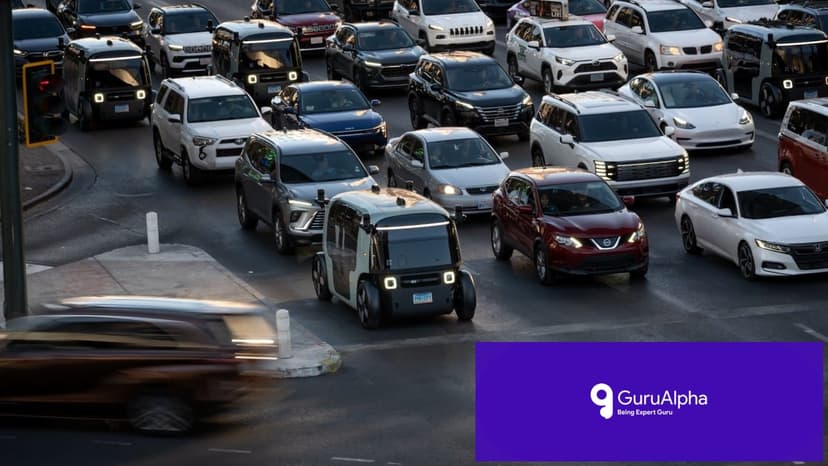
Amazon's Zoox is set to expand its robotaxi fleet beyond 100 vehicles in Nevada, marking a significant shift in autonomous transportation.
18 September 2026